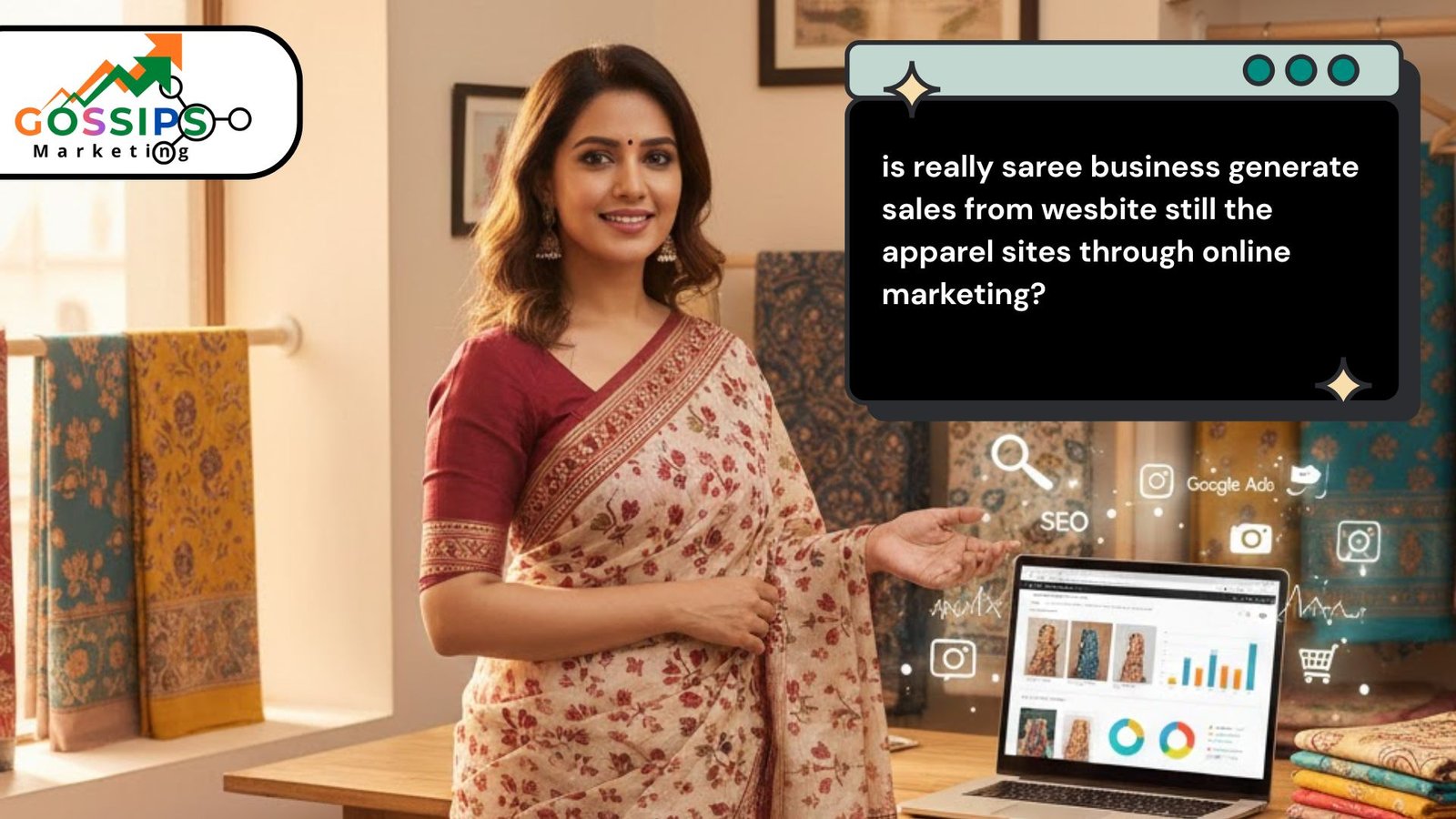
For saree business owners across India, the big doubt today is clear: “Can a saree website still generate real sales, or are only big apparel marketplaces winning?” The reality is that every business now needs a strong digital presence, and sarees are one of the most valuable and evergreen fashion categories in India. The question is not whether sarees sell online, but how you position your brand, website, and marketing.
Industry reports show India’s saree market is worth thousands of crores and expected to keep growing steadily over the next 5–10 years, with e‑commerce doubling its share in that time. Ethnic wear as a whole is seeing strong online growth driven by higher incomes, love for cultural fashion, and the convenience of online shopping. If you are not visible on Google, Instagram, and marketplaces today, you are simply leaving money on the table.
This blog is crafted specifically for saree business owners wholesalers, manufacturers, boutique owners, and resellers who want to move from only offline sales to a proper online saree brand.
Get Marketing Support for your business
Contact for Marketing Solutions for Your businesses…
Current Growth of Online Apparel Sales
Shift from Offline Saree Stores to Digital Platforms
India’s apparel market is rapidly shifting online. E‑commerce and D2C (direct-to-consumer) apparel brands are growing in double digits, and the D2C apparel segment alone is expected to reach billions of dollars in the next few years. Ethnic wear brands are riding this wave with their own websites plus marketplaces like Amazon, Flipkart, Myntra, and Meesho.
On platforms such as Meesho, sarees are among the top-selling categories around 148 sarees were sold every minute in 2022, and later reports show hundreds of sarees per minute during major sale events. This clearly proves that customers are fully comfortable buying sarees online; the opportunity is huge for any focused saree brand.
The Main Question: Does a Saree Website Still Convert into Real Sales?
On Reddit, many Indian entrepreneurs ask questions like “Need advice to start an online store for selling sarees” and “Need tips to sell sarees online.” The most upvoted answers usually say:
- Start with a simple but attractive website.
- Use Instagram and Facebook aggressively.
- Collect reviews and use them in your ads.
- Register on Google Business and build local + online visibility together.
On Q&A platforms like Quora, people regularly ask, “Is saree business profitable online?” and “How do I start an online saree business from home?” Popular advice highlights that sarees are evergreen, startup cost can be low, and margins are healthy when you combine your own website with digital marketing instead of depending only on walk-in customers.
So the honest answer: Yes, a saree website can absolutely generate real sales even today but only with a clear strategy, not just a basic catalog.
Understanding Today’s Online Saree Market
Growth of Ethnic Wear Ecommerce
The Indian ethnic wear market has seen strong growth thanks to rising fashion consciousness and love for cultural aesthetics. Reports show ethnic wear is expanding fast both in India and globally, with e‑commerce playing a major role in discovery and buying. Another saree-specific study predicts steady market growth over the next five years, driven by online channels, younger buyers choosing sarees for work and events, and the revival of regional weaves.
Changing Buyer Behavior
Reddit threads where Indian women ask “Where do you buy ethnic wear from?” show a clear pattern: many now rely on Instagram/indie brands, plus known platforms like Myntra, Nalli, Meena Bazaar, and curated handloom websites. Buyers check:
- Photos and videos
- Reviews and return policies
- Brand’s Instagram feed and comments
If your saree store is invisible online or looks outdated, modern buyers simply skip to the next tab.

Top Online Digital Marketing Courses in India
If you are exploring online digital marketing courses in India in 2026, you’re entering one of the fastest-growing, most future-proof…

Digital Marketing Course Topics: Complete Syllabus for Beginners in 2026
If you want to learn digital marketing but feel confused about where to start, this guide will help you. Most beginners…
Digital Marketing Certification: A Smart Step for Career and Business
Today, every business wants to grow online. From small shops to big companies, everyone is using the internet to connect…
SEO Agency in USA for Small Businesses in 2026
In 2026, every small business needs a strong online presence to grow faster and reach more customers. A professional SEO…


AI SEO in 2026: Top Strategies to Rank Higher on
AI SEO is changing the future of digital marketing. Today, businesses are using AI powered SEO strategies to improve Google…
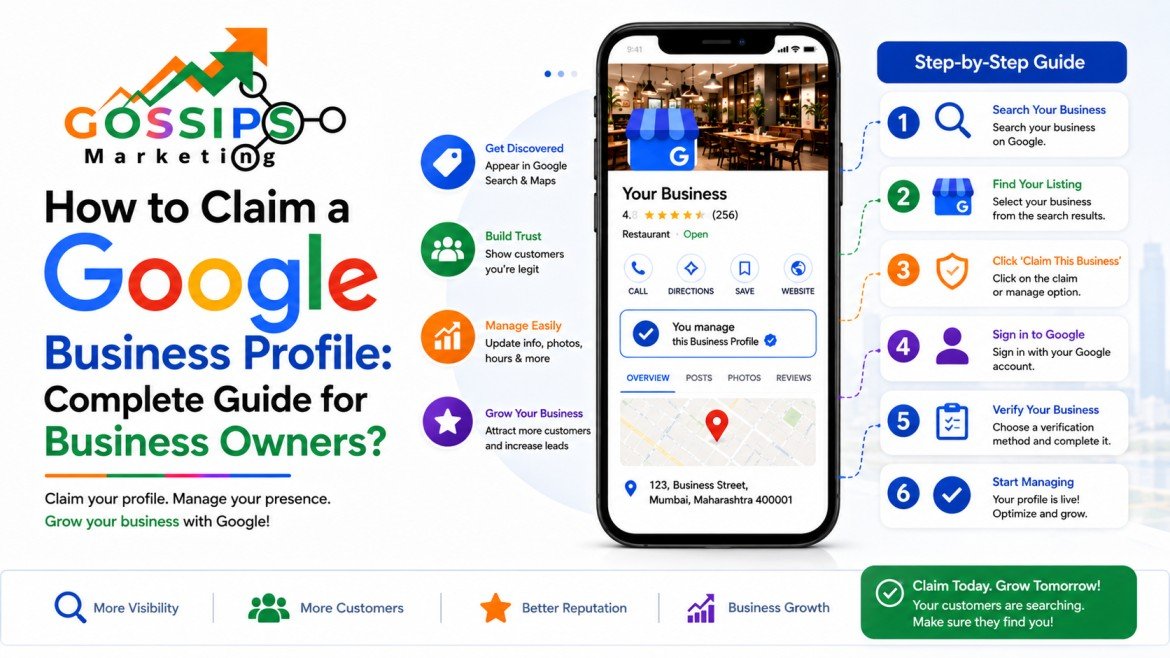
How to Claim a Google Business Profile: Complete Guide for
Introduction When someone searches your business name or “service + near me,” your Google Business Profile (GBP) is often the first…
Demand for Regional and Designer Sarees Online
There is high online demand for regional and designer sarees Ajrakh, Bagru, Kalamkari, Kanjivaram, Banarasi, Kota Doria, Chanderi, etc. For example, Ajrakh and hand block printed sarees have dedicated online collections and niche websites serving customers across India and abroad.
A good example is Mansi Hand Block Print, a Bagru, Jaipur–based hand block saree manufacturer. They run their own ecommerce site highlighting hand block sarees, suits, and kaftans, offer pan‑India and some international delivery, and support sales with YouTube and Instagram content. This is exactly how a regional saree business can use digital presence to attract direct orders beyond the local bazaar.
Can a Saree Website Really Generate Sales Today?
Yes But With the Right Strategy
Case studies of Indian saree brands show that focused SEO and content can grow organic traffic and online sales by over 100% in a few months once the basics are right. Wider research on ethnic wear brands confirms that SEO and social media marketing are now core drivers of traffic and revenue in this category.
Your saree website can sell daily if it:
- Targets the right keywords (fabric, style, region, occasion)
- Has strong visuals and clear product information
- Builds trust (policies, reviews, secure checkout)
- Drives regular traffic from SEO, social, and ads
Difference Between Listing Products and Selling Products
Listing = just uploading saree photos and prices.
Selling = combining:
- Storytelling (weave, artisan, region)
- Styling ideas (how to drape, where to wear)
- Offers (festive drops, limited editions)
- Follow-up (email/WhatsApp remarketing, retargeting ads)
Many Reddit comments to aspiring sellers stress learning what customers like, testing small batches, and then scaling designs that actually sell. That mindset must reflect on your website and campaigns.
Website vs Marketplace Performance
Marketplaces (Amazon, Myntra, Meesho, etc.):
- Massive ready-made traffic; Meesho alone sold crores of sarees with lakhs of suppliers.
- Easy logistics and COD, but higher competition and platform fees or discounts.
- You build less brand recall because customers remember the marketplace, not you.
Own Website (Shopify, WooCommerce, etc.):
- Better margins and direct customer data; you control pricing and storytelling.
- Requires investment in SEO, social media, and ads to drive traffic.
- Best for building a long-term saree brand and repeat buyers.
For most saree businesses, the winning model is both together: use marketplaces for volume and your own website for brand, margins, and loyalty.
Why Many Saree Websites Fail to Generate Sales
- Poor Product Photography
Dark photos, no drape shots, no back / pallu view, no close-ups of border and texture. - Weak Product Descriptions
Missing fabric details, fall/pico info, blouse piece clarity, or occasion suggestions. - No Trust Signals
No reviews, unclear return/ exchange policy, no physical address or proper contact info this is a red flag for online buyers. - No Traffic Strategy
Website launched, but no SEO, no content, no social posting, no ads then owners say “website is not working.” - Slow or Confusing Website Design
Heavy sliders, cluttered categories, too many popups, and complicated checkout kill conversions, especially on mobile.
Online Marketing Channels That Work for Saree Businesses
SEO for Saree Websites
- Ranking for saree keywords: Target phrases like “Bagru hand block saree,” “Kota Doria office wear saree,” “Jaipuri cotton saree online,” “party wear silk saree under 3000,” etc.
- Category & product page SEO: Optimize titles, meta descriptions, H1 headings, image alt text, and FAQs for each category and key product type.
Social Media Marketing
- Instagram reels & draping videos: Show real women draping your sarees, styling for office, festivals, and weddings.
- Festive & wedding content: Create series around Diwali, Karwa Chauth, Navratri, Shaadi season, regional festivals, and office parties.
Performance Ads
- Google Shopping & Search Ads: Target “buy [fabric/region] saree online” and show product feeds.
- Meta (Facebook & Instagram) Ads: Promote collections, lookbooks, and retarget website visitors and Instagram engagers.
Influencer & Creator Marketing
- Regional fashion creators: Partner with creators who speak in your target language and showcase your sarees as part of their ethnic looks.
- Bridal & festive collaborations: Style complete looks for mehendi, sangeet, reception, and office ethnic days.
How SEO Helps Saree Websites Get Regular Sales
- Long-Term Organic Traffic: Guides on “how to choose saree for office,” “best fabrics for summer sarees,” or “Bagru vs Ajrakh prints” can pull consistent Google traffic.
- Ranking for Fabric, Occasion & Style Searches: People search by fabric (“mulmul cotton saree”), occasion (“wedding guest saree”), region (“Jaipur hand block saree”), and price.
- Blog Content That Attracts Buyers: Write blogs that naturally link to your products; over time they become evergreen traffic and conversion assets.
Role of Visual Content in Saree Sales
- Model Photos: Show how the saree falls on the body, full front, side, and pallu views.
- Video Try-On & Draping Clips: Short reels dramatically increase purchase confidence for online saree shoppers.
- Zoom & Texture Shots: Close-ups of borders, motifs, and fabric weave justify your pricing and reduce returns.
Conversion Factors That Increase Saree Website Sales
- Reviews & Customer Photos: Social proof directly impacts saree sales; many Reddit commenters mention checking reviews carefully before ordering ethnic wear online.
- COD & Easy Return Policy: Especially critical for first-time buyers.
- Clear Size, Fabric & Care Info: Prevents confusion and reduces returns.
- Trust Badges & Secure Payments: Show payment gateway logos, SSL, and clear policies to make people feel safe.
Website Features That Improve Apparel Conversions
- Mobile-First Design: Most saree research and shopping now starts on mobile.
- Fast Loading Pages: Optimized images and minimal heavy scripts.
- Smart Filters: Fabric, color, price, occasion, weave/region, blouse included or not.
- Simple Checkout: Fewer steps, guest checkout, UPI and wallet options.
Website vs Marketplace: Which Generates More Saree Sales?
- Margin Difference:
- Brand Control:
- Website = your rules, your storytelling, consistent branding.
- Marketplaces = limited control, competing on price and ratings.
- Repeat Customer Advantage:
- On your own site, you build email/WhatsApp lists and can resell forever.
- On marketplaces, the platform owns the customer.
- When to Use Both:
- Start with marketplaces for cash flow.
- Parallelly build your own saree website for long-term brand and profit.
How Long Does It Take to Generate Sales from a Saree Website?
- SEO Timeline: 3–6 months to start seeing consistent organic orders if content and technical SEO are implemented properly.
- Ads vs Organic: Ads can start sales within days, but you pay per click. Organic traffic takes time but reduces your cost per sale long term.
- Building Trust Over Time: Genuine reviews, repeat buyers, and strong social content usually take 6–12 months to compound.
Practical Marketing Plan for a New Saree Website
First 30 Days – Setup
- Domain, hosting, and ecommerce platform (Shopify / WooCommerce).
- Essential pages: Home, About, Contact, Shipping & Returns, Privacy, FAQ.
- 30–50 hero products with proper photos and descriptions.
- Basic SEO: titles, meta descriptions, alt tags.
- Google Analytics, Search Console, and Facebook Pixel setup.
Traffic Generation Plan (First 90 Days)
- Run small-budget Meta and Google ads for bestsellers.
- Post daily on Instagram (reels + posts) and 3–4 times per week on Facebook.
- Publish 2 blogs per month targeting long-tail saree queries.
Content & Social Posting Plan
- Reels: draping, styling, behind-the-scenes printing/weaving, packaging.
- Posts: new arrivals, customer reviews, educational tips.
- Stories: polls on colors, fabric preferences, sneak peeks.
Sample Budget Split (Starting Stage)
- 40% – Performance ads (Google + Meta)
- 30% – Content, photography, and influencer collaborations
- 30% – SEO, blog writing, and tech improvements
🌸 Premium Hand Block Printed Sarees
Traditional Craftsmanship meets Modern Elegance – Authentic Jaipur Hand Block Prints

Traditional Hand Block Print Saree
Exquisite hand-crafted block print saree with intricate traditional patterns. Perfect for festive celebrations.

Designer Block Print Saree
Elegant designer saree featuring unique hand block patterns. A perfect blend of tradition and style.

Ethnic Block Print Saree
Beautiful ethnic patterns crafted by skilled artisans. Brings out the authentic Rajasthani charm.

Heritage Block Print Saree
Traditional heritage design with timeless appeal. Celebrates 500 years of block printing legacy.
FAQs
1. Is it really possible for a saree business website to generate sales through online marketing?
Yes. Data from apparel and ethnic wear markets clearly shows strong online growth, with e‑commerce’s share of saree sales expected to keep rising and platforms reporting huge saree volumes. Independent brands that invest in SEO, social media, and good UX are consistently growing their D2C saree sales. The key is not just launching a site, but treating it like a serious sales channel with regular marketing.
2. Is it profitable to sell sarees through a website?
Saree business margins can be very healthy many experts estimate 20–60% depending on sourcing, positioning, and selling model. Selling via your own website usually gives better margins than marketplaces because you avoid heavy commissions and have more control over pricing and offers. Profitability depends on:
- How efficiently you source stock
- How strong your brand is
- How smartly you run your ads and SEO
3. How much marketing budget is needed?
For a small to mid-sized saree brand:
- Start with a modest monthly budget that you are comfortable risking (for many Indian MSMEs this is often in the ₹10,000–₹50,000 range) split between ads, content, and SEO.
- Scale budgets gradually as you see which campaigns and channels actually bring profitable orders.
4. Which platform is best for saree ecommerce?
- For your own website: Shopify and WooCommerce are the most commonly used and give you full control.
- For marketplaces: Amazon, Flipkart, Myntra, and Meesho are the main players; niche ethnic platforms and B2B portals can also help wholesalers.
The best approach is usually your own website + 1–2 marketplaces.
5. Do regional sarees sell better online?
Yes, regional and handloom sarees have very strong online demand because customers across India and NRIs abroad look for specific weaves like Bagru, Ajrakh, Kanjivaram, Banarasi, and Chanderi that are not easily available in every city. Brands that highlight their regional story and craftsmanship often build a loyal niche audience.
How Gossips Marketing Prepares a Saree Website and Markets Your Online Business
A specialized digital partner can speed up this entire journey. Gossips Marketing, a Jaipur-based, results-focused digital marketing agency, helps businesses build strong online presence through services like SEO, web development, social media marketing, and performance campaigns.
For saree businesses, an agency like Gossips Marketing can:
- Design and develop a conversion-focused saree website (fast, mobile-first, with smart filters and secure checkout).
- Set up SEO structure for categories (fabric, region, occasion) and product pages.
- Plan and run Google Shopping and Meta ads specifically for saree collections.
- Build a content and Instagram strategy with reels, draping videos, and festive campaigns.
- Implement tracking and analytics so you know exactly which channels bring profitable orders.
For saree business owners especially in hubs like Jaipur, Surat, Varanasi, Kolkata this combination of a strong website plus smart online marketing is no longer optional. It is the new foundation for growing from a local saree shop to a trusted saree brand across India and beyond.