
Creating content that ranks well on search engines isn’t just about using keywords it’s about quality, relevance, and strategic optimization. With the rise of AI and machine learning, content optimization tools have become essential for writers, marketers, and SEO teams who want to save time while producing search-friendly content.
In this comprehensive guide, we break down the best SEO content optimization tools available in 2026, explain their key features, and share real insights on how they can help you create content that performs well organically.
Why Use SEO Content Optimization Tools?
Writing a blog or article today means competing against thousands of other pieces of content. Even if your writing is good, it won’t rank high unless it satisfies search engine and user intent. Content optimization tools help by analyzing what top-ranking pages are doing right, suggesting improvements in real time, and guiding writers toward data-backed decision making rather than guesswork.
With the growth of AI in search algorithms, smart tools now do more than just keyword counting they evaluate topic coverage, relevance, structure, readability, and even semantic relationships between terms.
Top SEO Content Optimization Tools Worth Considering
Below are some of the leading tools professionals use to improve content visibility, relevance, and search performance.
1. Surfer SEO
Surfer SEO stands out for combining real-time content scoring with practical optimization guidance. As you write, Surfer analyzes your text against top-ranking pages, suggesting keywords, headings, and content improvements that align with competitors.
Its intuitive interface works well for teams and individuals alike, and integrations with platforms like Google Docs and WordPress make editing and publishing smoother. Although some advanced features require additional investment, Surfer remains a reliable choice for improving search ranking and content structure.
2. Frase
Frase is ideal for creators who want an all-in-one content tool without a steep learning curve. It combines AI-generated content briefs, topic research, and optimization suggestions in a streamlined workflow. What makes Frase particularly valuable is its ability to automatically create outlines based on SERP analysis, saving hours of manual research.
While its keyword suggestions may not be as precise as premium alternatives, Frase offers great value at its price point and is especially useful for solo bloggers and small teams.
3. Clearscope
Clearscope is designed for editorial teams and larger content operations. It provides detailed recommendations for keywords and related terms, and grades content quality based on industry-standard scoring systems. Content professionals often choose Clearscope for its accurate NLP-driven suggestions and smooth integrations with writing tools.
While it sits at a higher price tier, the depth of insights and scalability for team collaboration make it worthwhile for established content teams.

How We Magnetize Your Audience – The Gossips Marketing Way
In a world where every brand is shouting, the ones that win are the ones that pull the right people in. At…


is really saree business generate sales from wesbite still the
For saree business owners across India, the big doubt today is clear: “Can a saree website still generate real sales, or…
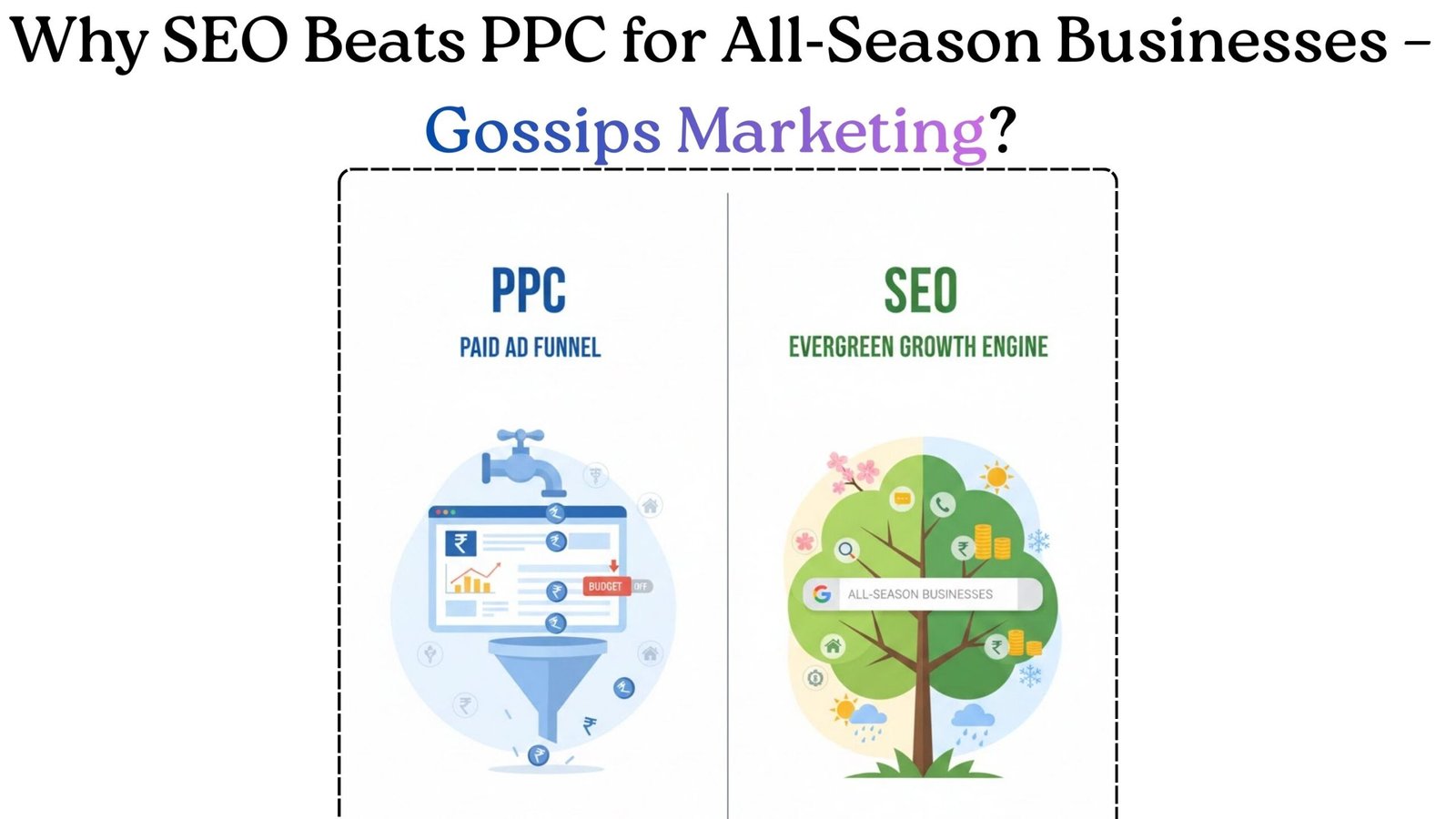
Why SEO Is Better Than PPC Today For All‑Season Businesses?
If a business runs 365 days a year like a clinic, real estate agency, coaching institute, SaaS product, or local…

Digital Hoardings in Jaipur: Low‑Cost, High‑Impact Branding for Local Businesses
Namaste guys, let’s start with a new update from Jaipur’s advertising scene digital billboards (digital hoardings) at Rambagh Circle and…

Business Not Running? The Ultimate Guide for Shop Owners to
Are you a shop owner who sits in the shop for hours and thinks: “Pehle jaise customer nahi aa rahe…”“Market me…

How ChatGPT Outage Stops the Digital World for a While?
Published: February 04, 2026 On February 4, 2026, ChatGPT experienced a significant outage affecting thousands of users across the United States….
4. MarketMuse
MarketMuse is more than an optimization tool it’s a strategic AI companion for topic planning, gap analysis, and content briefs. It helps writers identify content coverage weaknesses and build comprehensive topic clusters that address search intent holistically.
Large sites and enterprise teams tend to benefit most from MarketMuse, as it excels in coordinating large content inventories and improving topical authority.
5. Writesonic
An affordable option with AI content generation built-in, Writesonic helps users create SEO-friendly content quickly. Its real-time SERP analysis and keyword suggestions guide writers toward optimized topics, while the AI article writer assists with initial drafting.
Ideal for marketers, bloggers, and small businesses, this tool offers a low barrier to entry and decent output quality — though final editing is often needed to ensure tone and accuracy.
6. Scalenut
Scalenut combines content planning, drafting, and optimization in one interface. Its “Cruise Mode” helps generate initial drafts, while topic clusters and SERP analysis connect your content with search intent.
Though its AI output often needs refinement, Scalenut’s balanced feature set and pricing make it a good choice for teams that need to streamline workflows without managing multiple tools.
Also Read: How to Use Reverse Image Search
Bonus Tools Worth Exploring
7. AirOps
AirOps is a powerful AI-based platform designed for teams and agencies that manage large-scale SEO content production. It focuses on creating structured, repeatable workflows that help speed up content creation without compromising quality.
The platform offers customizable AI workflows for keyword research, SERP insights, content drafting, and seamless CMS integrations such as WordPress. Many users appreciate how quickly AirOps can generate optimized, ranking-ready content, especially for programmatic SEO and AI-assisted overviews.
Pros: Excellent for automation, strong integrations, and efficient content scaling.
Cons: May feel complex for beginners and can be costly for smaller teams.
Overall, AirOps is best suited for businesses aiming to scale SEO efforts rapidly with advanced automation.
8. Semrush SEO Writing Assistant
Semrush’s SEO Writing Assistant is a popular choice among content creators who want instant feedback on SEO, readability, tone, and originality while writing. It integrates smoothly with Google Docs and WordPress, making it convenient for teams already using Semrush tools.
The assistant provides keyword recommendations and competitor-based suggestions, helping writers align content with search intent. However, the higher pricing and mixed feedback on ranking impact make it less attractive for budget-conscious users. It also lacks advanced content brief creation and broader multilingual support.
Despite these limitations, it remains useful for those deeply invested in the Semrush ecosystem.
9. Outranking
Outranking.io is an AI-powered SEO platform that helps users plan, write, and optimize content with a strong focus on search visibility. It simplifies tasks like SERP analysis, keyword discovery, and content checklists, which can significantly reduce research and writing time.
Users often highlight its structured approach to content creation and its clean, goal-oriented features. That said, some users mention a learning curve, occasional AI inaccuracies, and interface clutter.
Overall, Outranking is a solid option for marketers and writers who want a guided, SEO-first content workflow, especially for competitive niches.
Check This: Alternative Search Engines
10. Dashword
Dashword is a clean and easy-to-use SEO content optimization tool aimed at marketers, writers, and small teams. Its standout feature is the content brief generator, which analyzes top-ranking pages and turns competitor data into clear, actionable guidance.
The real-time content score and optimization tips help writers stay focused on relevance and quality without overwhelming them with complex metrics. While pricing may be a factor for some users, the simplicity and clarity of Dashword make it a great choice for efficient content creation.
11. GrowthBar
GrowthBar is an AI-powered SEO tool and browser extension that helps with keyword research, content outlines, AI writing, and competitor analysis. Its affordable pricing makes it especially appealing to bloggers, startups, and solo marketers.
Users appreciate its straightforward interface and fast insights, making it easy to handle everyday SEO tasks. However, compared to advanced SEO platforms, its feature set is relatively basic, and some users have reported occasional support delays.
Even so, GrowthBar remains a strong budget-friendly solution for improving content visibility and workflow efficiency.
12. NeuronWriter
NeuronWriter uses AI and semantic analysis to help users optimize content based on SERP data and competitor performance. It offers features like AI writing assistance, keyword recommendations, internal linking ideas, and integrations with tools like WordPress and Google Search Console.
Users often praise its clean interface and noticeable improvements in rankings. However, beginners may need time to adapt, and AI-generated content usually benefits from manual refinement. Some users also note that grammar checking could be improved.
Overall, NeuronWriter is a dependable choice for SEO professionals and content teams looking for data-driven optimization with flexible AI support.
Choosing the Best Tool for Your Needs
Every content optimization tool has its unique strengths. Some excel at real-time scoring and suggestions, others focus on AI content briefs or strategic planning, and a few provide end-to-end SEO guidance for teams.
If you’re just starting with SEO content, tools with intuitive workflows and lower pricing like Frase or Writesonic may be best. Established content teams or agencies often benefit more from tools offering deep analytics and collaboration features, like Clearscope or MarketMuse.
Remember that no tool replaces quality writing and thoughtful strategy these tools are best used to support your creative and analytical decisions.
Final Thoughts
SEO content optimization tools are transforming how digital content is created and refined. By combining AI-powered insights with live SERP analysis, these platforms help you write content that aligns with both search engines and user intent. Choosing the right tool depends on your budget, team size, and specific workflow needs but any of the options above can elevate your content game in 2026 and beyond.
Frequently Asked Questions
1. Which AI SEO content optimization tool is best for beginners?
For beginners, tools like Dashword and GrowthBar are the easiest to start with. They offer simple dashboards, clear content scores, and actionable suggestions without overwhelming data. These tools focus on guiding writers step by step, making them ideal for bloggers, startups, and small teams that want quick SEO improvements without a steep learning curve.
2. Are AI SEO tools reliable for improving Google rankings?
AI SEO tools can significantly support ranking improvements when used correctly. They analyze SERPs, competitors, and keywords to guide content optimization. However, they work best when combined with human editing and strategic thinking. Tools like NeuronWriter and Outranking provide strong data insights, but quality, intent matching, and originality still play a major role in Google rankings.
3. Can small businesses afford advanced SEO content optimization tools?
Yes, many SEO tools are designed with small businesses in mind. Platforms like GrowthBar and Dashword offer affordable plans with essential features such as keyword research, content briefs, and optimization tips. While enterprise tools may be expensive, budget-friendly options still provide enough value to improve visibility, traffic, and content quality effectively.
4. What is the main difference between AI writing tools and SEO optimization tools?
AI writing tools focus mainly on generating text, while SEO optimization tools go deeper into search performance. SEO tools analyze competitors, keywords, SERP patterns, and content gaps to guide optimization. Platforms like AirOps and NeuronWriter combine both writing and optimization, helping users create content that is not only readable but also search-engine friendly.
5. Should AI-generated SEO content be edited manually before publishing?
Yes, manual editing is highly recommended. AI tools provide strong structure, keywords, and optimization suggestions, but human input ensures accuracy, natural tone, and brand alignment. Editing also helps remove repetitive phrases and improve clarity. Search engines value helpful, original content, so refining AI-assisted drafts leads to better engagement and long-term SEO results.