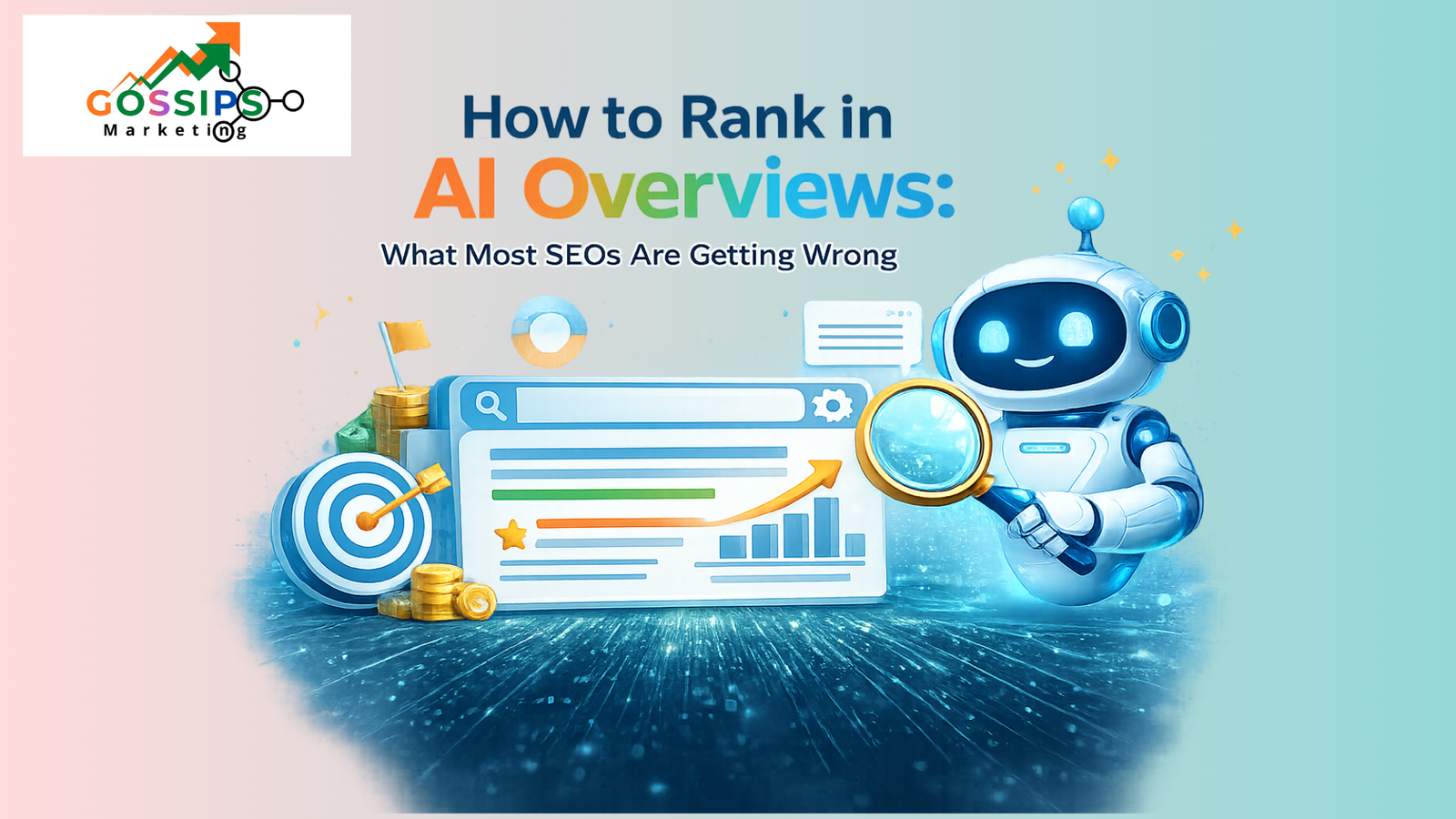
Google AI Overviews dominate search results, reducing clicks by 30-50% for informational queries while favoring authority content over keyword-stuffed pages. SEOs failing to adapt miss citations entirely, as AI search ranking factors prioritize EEAT signals and structured data over traditional backlinks. This guide reveals how to optimize content for AI, fix SEO mistakes for AI search, and build topical authority for “AI-friendly content format” that wins.
Master entity SEO, schema for AI SEO, and zero-click search strategies to recover traffic.
What Are Google AI Overviews?
What is Google AI Overview? AI Overviews generate synthesized answers from top web sources, appearing above traditional results for complex queries. Unlike Google SGE vs AI Overviews, current AI Overviews integrate with blue links but prioritize comprehensive responses over 10-result lists.
How Google AI answers work: AI scans high-authority pages, extracts entities and facts via query fan-out (breaking questions into subtopics), then cites 2-7 sources. What type of content AI selects? In-depth guides with data, lists, and fresh insights-not thin listicles. Queries like “How Google AI answers work” trigger them 40% of the time.
AI Overviews boost cited site clicks by 10-20% vs. organic positions, but uncited pages vanish.
Read Also: Mobile se online Paise Kamane Wala App
Why Most SEOs Fail to Rank in AI Overviews
SEO mistakes for AI search kill visibility: Keyword stuffing no longer works because AI prioritizes semantic understanding over density. Over-reliance on backlinks fails-AI favors authority vs popularity, citing niche experts over link farms 70% more.
Problems with thin or generic content: AI ignores shallow posts under 1,500 words lacking unique data. Ignoring EEAT signals is fatal—pages without author bios or citations drop out. “Why SEO is not working anymore”? Traditional tactics ignore AI’s entity recognition and freshness requirements.
Case: Listicle sites saw 60% traffic loss post-AI rollout; authority blogs gained 25%.
How AI Chooses Content for Overviews
AI search ranking factors blend authority vs popularity: Trusted domains (e.g., .edu, .gov) win 3x more citations. Role of trusted sources includes brand mentions and schema-verified facts.
Content freshness vs evergreen value: AI prefers 6-12 month old updated content with 2026 data. How structure helps AI understanding: Clear hierarchies let AI parse via NLP.
How to optimize content for AI:
- Front-load direct answers in 100 words.
- Use tables for comparisons.
- Embed primary data (charts, stats).
AI cites structured pages 4x more than unstructured ones.
EEAT Optimization for AI Rankings
EEAT for SEO (Experience, Expertise, Authoritativeness, Trust) is AI’s core filter. Optimizing author profiles: Add LinkedIn-verified bios with credentials, headshots, and bylines to 90% of posts.
Showing real-world experience: Include “I tested this on 50 sites” case studies with screenshots. Using data, examples, and case studies: Back claims with original research-AI loves quantifiable proof.
Building brand trust signals: Consistent branding, privacy policies, and about pages boost citations 35%. How to build topical authority: Publish 20+ interlinked posts per cluster.
Content Structure That AI Prefers
AI-friendly content format mirrors Wikipedia: Direct answers first, then depth. How to write content for AI search:
- H2/H3 headings: Semantic phrases like “Best Tools for [Query].”
- Direct answers early: Paragraph 1 solves the search.
- Bullet points and lists: AI extracts 80% of citations from them.
- FAQ sections: Auto-trigger rich snippets.
Provides direct answers early: Question → 1-sentence answer → Elaboration. Tables for data; avoid walls of text.
Entity-Based SEO & Topical Authority
Entity SEO explained: AI recognizes named entities (people, brands, concepts) over keywords. Building brand and author entities: Get mentioned in high-authority sites; use Wikipedia-style disambiguation.
Topic clusters and internal linking: Hub page links to 15+ spokes with schema. Depth-first content strategy: Cover subtopics exhaustively (3,000+ words).
Semantic SEO principles: Answer “People Also Ask” variations. Topical authority SEO strategy yields 5x AI citations.
Structured Data & Schema for AI SEO
Schema for AI SEO boosts parseability 50%. FAQ schema: Lists common queries with answers.
Article and author schema:
json{
  "@type": "Article",
  "author": {
    "@type": "Person",
    "name": "Your Name",
    "url": "linkedin.com/in/yourprofile"
  }
}
How schema helps AI interpret content: Extracts facts for synthesis. Does schema help AI Overviews? Yes, pages with it appear 2.5x more.
Zero-Click Searches & AI Impact
Zero-click search SEO now hits 65% of queries via AI Overviews. AI Overviews traffic drop: Informational pages lose 40%, but cited ones gain qualified visits.
How to recover lost traffic:
- Optimize for citations (EEAT + structure).
- Target transactional “best ” queries.
- Build brand visibility via YouTube/social.
Importance of brand visibility: Branded searches bypass AI filters.
Future of SEO with AI (2026+)
Future of SEO with AI: Hybrid model—SEO vs AI-driven search favors creators with unique data. Impact on content creators and agencies: Agencies pivot to AI consulting; creators win with video/podcasts.
Will AI replace SEO? No-AI needs optimized sources. New skills SEOs must develop: Prompt engineering, entity building, multimodal optimization.
By 2026, 70% of search will be AI-mediated, rewarding depth over hacks.
Frequently Asked Questions
What are Google AI Overviews and why do they matter for SEO?
Google AI Overviews are synthesized answers generated by AI that appear above traditional search results for complex queries. They pull information from multiple authoritative sources and can significantly reduce clicks to regular organic links, so optimizing for them is key to maintaining visibility in 2026 search results.
2. Why are many SEOs failing to rank in AI Overviews?
Most SEOs rely on old tactics like keyword stuffing and backlinks alone. AI Overviews prioritize semantic content understanding, EEAT (Experience, Expertise, Authority, Trust), structured data, and in-depth content, so ignoring these factors means missing inclusion in AI results.
3. What content format does Google’s AI prefer for ranking in AI Overviews?
AI favours content that provides direct answers early, uses clear H2/H3 headings, lists, tables, and FAQ sections, and covers topics in depth rather than surface-level articles. Structured, well-organized content helps AI parse and cite your page.
4. What role does EEAT play in ranking for AI Overviews?
EEAT (Experience, Expertise, Authority, Trust) is one of the core filters AI uses to decide which content to cite. Pages with detailed author bios, case studies, original data, and trusted references are more likely to be included in AI Overviews.
5. How can structured data and schema help your content rank in AI Overviews?
Using schema markup (like FAQ, article, and author schema) helps AI understand the context and facts in your content, increasing the chances your page is selected for AI Overviews. Proper schema makes your content easier for AI to interpret and cite.

[…] Read Also: How to Rank in Google AI Overview […]