Omnichannel Marketing Explained
Many businesses feel busy with marketing but very few are actually growing because of it.
Ads are running. Social media posts are going out. SEO reports look active. Yet revenue feels stuck, customer journeys feel broken, and marketing teams struggle to prove real impact. This is the difference between marketing that is running and marketing that is driving growth.
In 2025, growth doesn’t come from doing more marketing. It comes from connecting what you’re already doing. That’s where omnichannel marketing enters the picture.
Brands that integrate multiple channels into one seamless experience consistently outperform those relying on isolated tactics. Industry leaders like Neil Patel have repeatedly highlighted that omnichannel strategies outperform single-channel efforts backed by data showing up to 287% higher purchase rates when three or more channels work together.
This article breaks down what omnichannel marketing really means, why single-channel strategies fail, and how businesses especially small and mid-sized ones can use omnichannel thinking to drive sustainable growth.
Why One Marketing Channel Isn’t Enough Anymore?
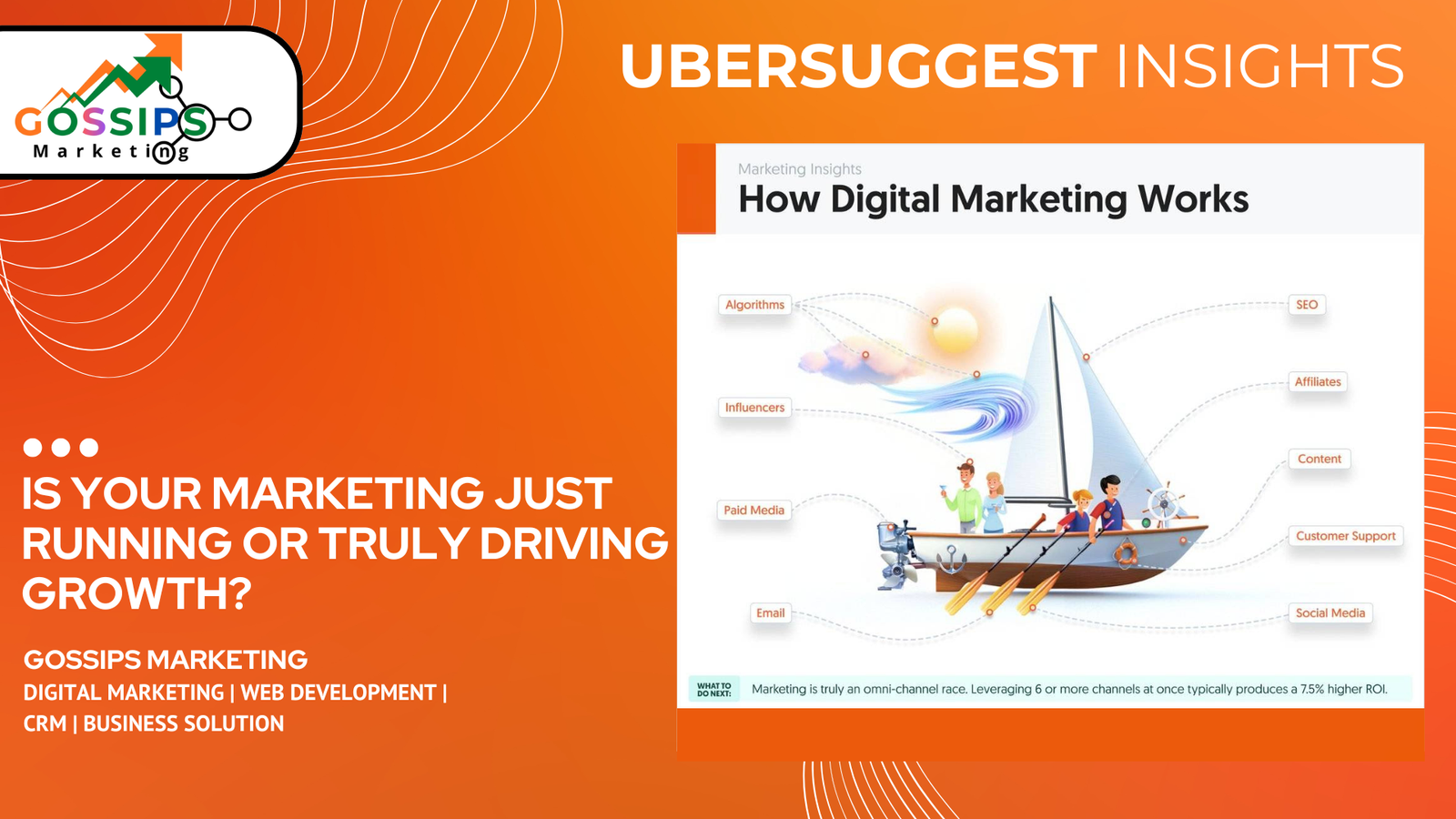
Relying on a single marketing channel is like rowing a boat with one oar. You move, but you don’t go very far and you definitely don’t go straight.
A business focused only on:
- Social media
- SEO
- Paid ads
- Email marketing
is automatically limiting its reach.
Customers don’t live on one platform. They move fluidly between Google, Instagram, email, WhatsApp, YouTube, and websites often within the same day. When your marketing exists in only one place, you miss large parts of the customer journey.
The Real Cost of Single-Channel Marketing
Single-channel marketing creates:
- Inconsistent brand experiences
- Lower engagement rates
- Missed personalization opportunities
- Slower growth over time
For example, a business that relies only on social media ignores search traffic entirely. That means missing users with high intent people actively looking for solutions. On the other hand, SEO-only brands miss out on relationship-building and remarketing opportunities that social and email provide.
Growth slows not because marketing is weak but because it’s incomplete.
Why Digital Marketing Fails in Isolation?
Each digital channel solves only one part of the customer journey.
- SEO captures intent
- Ads create urgency
- Social media builds trust
- Email nurtures relationships
When these channels operate in isolation, the experience breaks.
Read Also :- Why Blog Posts Alone Aren’t Enough for Google Rankings in 2025?
Real-World Example of Disconnected Marketing
Imagine a retailer running ads for products that are out of stock in-store. The ads generate clicks, but customers arrive frustrated. This disconnect famously experienced by large retailers like Argos in past campaigns hurts trust and conversions.
Another example:
- SEO drives traffic to a blog
- But email doesn’t follow up
- Social content doesn’t reinforce the message
- Ads don’t retarget visitors
Each channel works but not together. The result is fragmented growth and wasted budget.
Digital marketing fails in isolation because customers don’t experience brands in isolation.
What Is Omnichannel Marketing?
Omnichannel marketing means all your marketing channels work together as one system.
Instead of running SEO, ads, email, and social media separately, omnichannel marketing connects them so they:
- Share data
- Reinforce messages
- Support the same customer journey
Neil Patel describes omnichannel marketing as the removal of silos where every channel knows what the others are doing.
Omnichannel vs Multichannel (Quick Clarity)
- Multichannel marketing:
Uses multiple platforms, but each operates independently. - Omnichannel marketing:
Integrates platforms so the customer experience is seamless and consistent.
In omnichannel marketing:
- A blog visitor can be retargeted via ads
- An email campaign reflects recent website activity
- Social media content supports search intent
The brand feels unified, not scattered.
Which Marketing Channels Deliver the Best Results Together?
The most effective omnichannel strategies combine channels that naturally support each other.
High-Performing Channel Combinations
- SEO + Content Marketing
Builds long-term organic traffic and authority. - Social Media + Content
Distributes and amplifies content for engagement. - Email Marketing
Nurtures leads captured through SEO, ads, and social. - Paid Ads
Accelerates results and retargets warm audiences. - Influencer & Affiliate Marketing
Extends reach and builds credibility. - Customer Support & CRM
Improves retention and lifetime value.
For example:
- SEO data reveals high-performing keywords
- Those keywords shape blog content
- Blog readers are retargeted with ads
- Email campaigns personalize offers based on behavior
Each channel strengthens the others.
How Using Multiple Platforms Boosts ROI?
Omnichannel marketing isn’t just about visibility it’s about profitability.
Data consistently shows:
- Campaigns using 3 or more channels see 287% higher purchase rates
- Omnichannel customers have 89% higher retention
- Repeat purchases increase by 250%
- Average order value rises by 13%
Why does this happen?
Because customers trust brands they encounter consistently across platforms. Repetition builds familiarity, and familiarity drives conversions.
Unified data also allows accurate attribution so businesses understand which channels assist conversions, not just which one gets the final click.
What Are Diminishing Returns and When Do They Happen?
More channels don’t always mean better results.
Diminishing returns occur when adding more platforms or increasing spend stops producing proportional growth.
Common Causes of Diminishing Returns
- Overspending on saturated ad platforms
- Expanding to new channels without integration
- Channel cannibalization (one channel stealing traffic from another)
- Poor data tracking
For example, running heavy ads on two platforms targeting the same audience can increase costs without increasing conversions.
The solution is not to stop expanding but to:
- Monitor ROAS and conversion quality
- Cap spend where performance plateaus
- Integrate before scaling further
The ideal omnichannel setup usually involves 3 to 5 well-optimized channels, not 10 disconnected ones.
Why Depending Only on SEO or Paid Ads Is Risky
Many businesses build their entire growth engine on a single channel usually SEO or paid ads. This is risky.
Risks of SEO-Only Growth
- Google algorithm updates (Panda, BERT, Helpful Content) can drop rankings overnight
- Traffic volatility increases
- Recovery takes months
Risks of Ads-Only Growth
- Traffic stops the moment spending stops
- Rising CPCs reduce profitability
- No long-term asset is built
Diversified omnichannel strategies reduce this volatility. When one channel dips, others stabilize growth.
How to Optimize Existing Channels Before Expanding
Before adding new platforms, businesses should optimize what they already have.
Practical Optimization Steps
- Audit performance metrics
Review traffic, engagement, and conversions per channel. - Unify data sources
Connect analytics, CRM, and email tools for personalization. - Improve cross-channel messaging
Align offers, tone, and timing across platforms. - A/B test consistently
Test headlines, CTAs, landing pages, and emails. - Automate where possible
Use workflows to reduce manual effort.
Often, small optimizations across existing channels unlock significant growth without increasing spend.
Best Omnichannel Strategy for Small Businesses
Omnichannel marketing isn’t just for large brands.
Small businesses can start lean and still see strong results.
Ideal Starter Channel Mix
- SEO – Using free tools and content optimization
- Email Marketing – Automated sequences and newsletters
- Social Media – Organic content and engagement
Practical Low-Budget Plan
- Optimize Google Business Profile
- Repurpose one piece of content across platforms
- Use free analytics tools
- Maintain consistent messaging
Automation and integration matter more than budget. When channels support each other, even small teams can scale efficiently.
Final Thoughts: Make Marketing Growth-Focused
Marketing activity doesn’t equal marketing growth.
True growth comes from:
- Integration, not isolation
- Strategy, not scattered effort
- Customer journeys, not channel metrics
Omnichannel marketing shifts the focus from “running campaigns” to building systems that scale. Businesses that adopt this approach consistently report:
- Stronger customer loyalty
- Better ROI
- Up to 9.5% annual revenue growth
If your marketing feels busy but stagnant, the problem isn’t effort it’s connection.
Frequently Asked Questions (FAQ)
What is the difference between omnichannel and multichannel marketing?
Omnichannel integrates all channels into one unified experience, while multichannel uses multiple platforms independently without coordination.
How many channels are ideal for omnichannel marketing?
Three to five channels typically provide the best balance between reach and ROI without causing diminishing returns.
Can small businesses afford omnichannel marketing?
Yes. With free tools, automation, and content repurposing, small businesses can run effective omnichannel strategies on limited budgets.
What risks come with using too many marketing channels?
Diminishing returns, audience overlap, management overload, and reduced efficiency if channels are not properly integrated.
How do I know if my marketing is truly driving growth?
Growth-focused marketing shows consistent increases in conversions, retention, and revenue not just impressions, clicks, or activity.

[…] Read Also :- Is Your Marketing Just Running or Truly Driving Growth? […]