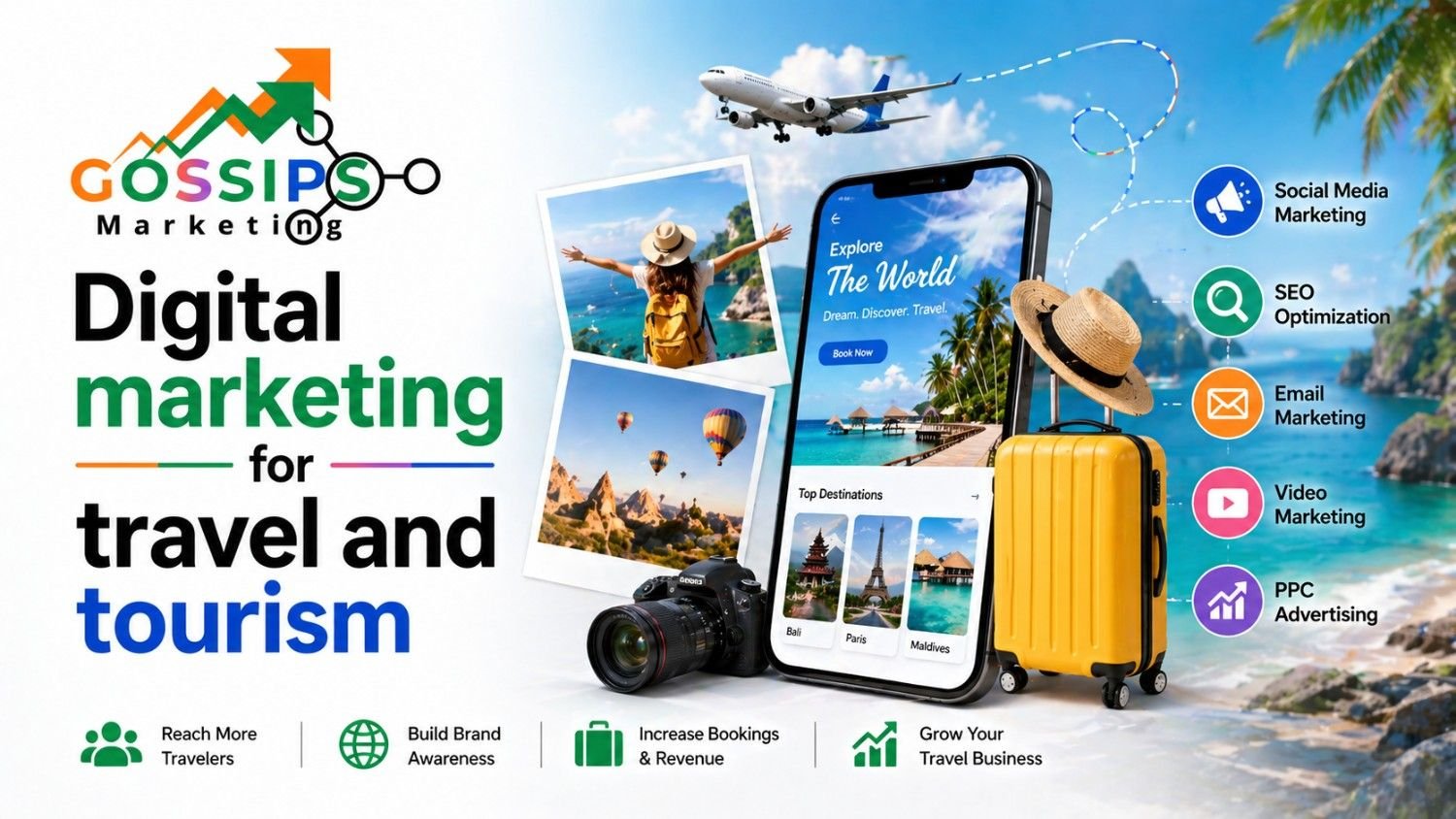
In 2026, digital marketing for travel and tourism is no longer optional. It is the main driver of leads, bookings, and brand visibility for any travel agency. Travelers now start their journey online, comparing packages, reading reviews, and watching videos before they ever talk to an agent. With the right strategy, digital marketing in tourism helps your agency stand out in crowded search results, inspire travelers on social media, and turn website visitors into paying customers. Agencies like Gossips Marketing which is the digital marketing agency in India specialize in designing these data-driven campaigns so travel brands get consistent inquiries and higher ROI from their marketing spend.
Fill Your Details…
Join thousands getting insider tips, strategies & updates — straight to their inbox. No spam, ever.
You’re In!
Thanks for Submission. Our team will contact you soon…
We respect your privacy. 100% secure & no spam.
How Travel & Tourism Have Evolved?
The travel and tourism industry has shifted from brochure-based offline promotion to highly visual, online-first discovery. Most users research destinations, compare prices, and read blogs or watch vlogs before shortlisting a tour operator or travel agency. Reviews, social proof, and user-generated content strongly influence which agency they finally trust with their bookings. This is why a strong online presence and clear brand positioning matter more than ever for agencies in the digital marketing in tourism industry.
List your business here :- Business listing Sites
Why Digital Marketing Is Essential for Travel Agencies
Today, around 80–90% of customers research brands online before buying, including travel services. For travel agencies, this means your website, Google presence, and social media are often your first impression not your office or sales team. Digital marketing for travel and tourism allows you to reach people at every stage: from “dreaming” about destinations to actively looking for packages and finally booking.
Social platforms like Instagram, YouTube, and Facebook heavily shape travel decisions as people save reels, shorts, and posts for future trips. Visual content, blogs, and customer reviews together build trust and nudge users toward contacting your agency instead of a competitor. Because everything is measurable, your agency can see which channels bring the most leads and optimize accordingly, making digital marketing in tourism more efficient than traditional print ads or hoardings.
Key Digital Marketing Strategies for Travel Businesses
1. Search Engine Optimization (SEO)
SEO helps your travel agency appear when users search for terms like “Rajasthan honeymoon packages” or “Jaipur to Leh Ladakh tour.” With on-page SEO, content optimization, and link building, you can rank for high-intent keywords related to digital marketing in tourism industry and your specific services. Local SEO—optimizing Google Business Profile, local citations, and reviews—ensures you show up when someone searches “travel agency near me” in your city.
2. Social Media Marketing
Travel is highly visual, which makes platforms like Instagram, Facebook, and YouTube perfect for storytelling and inspiration. Reels, stories, shorts, and carousels featuring real trips, behind-the-scenes moments, and customer experiences can dramatically increase brand awareness. For a travel agency, consistent social media marketing builds a community and keeps your brand top-of-mind when followers are ready to book.
3. Content Marketing
High-quality blogs, destination guides, and itineraries educate users and establish your agency as an expert. When travelers find useful content like “7-Day Rajasthan Heritage Tour Itinerary,” they’re more likely to trust you with planning the trip. Content marketing supports SEO, nurtures leads, and provides material to share across social media and email campaigns.
4. Paid Advertising (PPC)
Google Ads and social media ads allow you to target very specific audiences based on location, interests, budget, and travel behavior. For example, you can run campaigns focused on “summer Europe packages” only for users interested in international travel within certain age and income brackets. Because results are trackable, you can quickly see which ads bring inquiries and optimize for cost per lead, making PPC a powerful tool in digital marketing for travel and tourism.
5. Email Marketing
Email marketing helps you stay connected with past and potential customers at almost zero marginal cost. Travel agencies can use email to share personalized offers, seasonal deals, last‑minute discounts, and curated itineraries based on user interests. This not only drives repeat bookings but also increases customer lifetime value by building long-term relationships.
Influencer & Video Marketing in Tourism
Influencer marketing has become a key part of digital marketing in tourism because travelers trust real experiences more than generic ads. Partnering with travel influencers helps your agency reach niche audiences and showcase authentic, experiential content. Video content vlogs, hotel walkthroughs, destination highlights, and virtual tours gives users a “preview” of what they will experience, increasing their confidence to book. Short-form videos on Instagram Reels and YouTube Shorts can go viral and generate massive organic reach for your travel brand.
Key Challenges in Travel Digital Marketing
The travel niche is highly competitive, with global OTAs, local agencies, and new players all targeting similar keywords and audiences. Seasonality adds another challenge: traffic and bookings often fluctuate around holidays, school vacations, or specific weather cycles. Algorithms on Google, Instagram, and other platforms keep changing, so strategies that worked last year may need updates in 2026. Without a clear strategy and ongoing optimization, agencies can waste ad spend, miss ranking opportunities, or struggle to grow beyond word-of-mouth.
How Professional Agencies Like Gossips Marketing Help
Hiring a specialized digital marketing agency gives travel businesses access to a full team of SEO experts, content writers, media buyers, and strategists without building an in‑house department. Professional agencies bring proven frameworks, latest tools, and AI-powered insights to design campaigns that actually convert, not just generate clicks.
An experienced tourism-focused agency will:
- Research the right keywords and audiences for your packages.
- Build a content and social media calendar around peak and off-peak seasons.
- Run SEO, PPC, and remarketing campaigns that align with your margins and capacity.
- Track leads, calls, and bookings so you can see real revenue impact.
This kind of data-driven approach leads to more website traffic, more qualified inquiries, and higher overall revenue for travel agencies. Agencies like Gossips Marketing focus specifically on digital marketing for travel and tourism, helping tour operators and agencies increase visibility, build trust, and consistently fill their departures.
Future Trends in Digital Marketing in Tourism Industry
In 2026, AI is playing a huge role in personalization—recommending trips, dates, and offers based on user behavior and past bookings. Voice search is growing rapidly, which means optimizing for conversational queries like “best family tour packages in Rajasthan” becomes essential. Mobile-first design is non‑negotiable, as a large majority of searches and bookings now happen on smartphones.
Sustainable and experience-based travel is also on the rise, and agencies that communicate their eco-friendly practices and unique local experiences stand out more easily online. Combining these trends with strong digital marketing in tourism gives forward-thinking travel agencies a clear competitive edge in the coming years.
Conclusion
Digital marketing for travel and tourism is the fastest, most measurable, and most cost-effective way for travel agencies to attract new customers in 2026. By combining SEO, content, social media, PPC, email, and influencer collaborations, your agency can stay visible at every stage of the traveler’s journey. Despite competition and changing algorithms, a smart, data-backed strategy ensures your brand keeps growing in visibility, leads, and bookings. Partnering with a professional agency like Gossips Marketing can accelerate this growth and let you focus on what you do best—creating unforgettable travel experiences.
FAQs on Digital Marketing for Travel Agencies
Q1. How does digital marketing in tourism help a small travel agency compete with big brands?
Digital marketing levels the playing field by allowing even small agencies to rank on Google, run targeted ads, and build strong social media communities at a reasonable cost. With good SEO, content, and reviews, a niche agency can outrank larger players for specific destinations or experiences.
Q2. Which digital channels are most important for travel agencies in 2026?
Search engines, Instagram, Facebook, YouTube, and Google Business Profile are the core channels for most travel brands. Email marketing and remarketing ads are also essential for nurturing leads and converting users who previously visited your website or interacted with your content.
Q3. How soon can a travel agency see results from digital marketing?
PPC campaigns and social ads can start generating inquiries within days or weeks if set up correctly. SEO and content marketing take longer—usually a few months—but they build long-term visibility and organic traffic that keeps delivering results over time.
Q4. Is hiring a digital marketing agency worth it for travel businesses?
For most travel agencies, hiring a specialized digital marketing agency is cost-effective compared to building a full in‑house team. You get access to experts, tools, and strategies that are already tested in the tourism sector, which usually leads to better ROI and more predictable growth.
Q5. What should a travel agency track to measure digital marketing success?
Key metrics include website traffic, inquiries (forms, calls, WhatsApp), cost per lead, conversion rate, and total bookings generated from online channels. Tracking these numbers helps you identify which campaigns and platforms are driving the best results, so you can invest more confidently in digital marketing in tourism industry.