Published: February 04, 2026
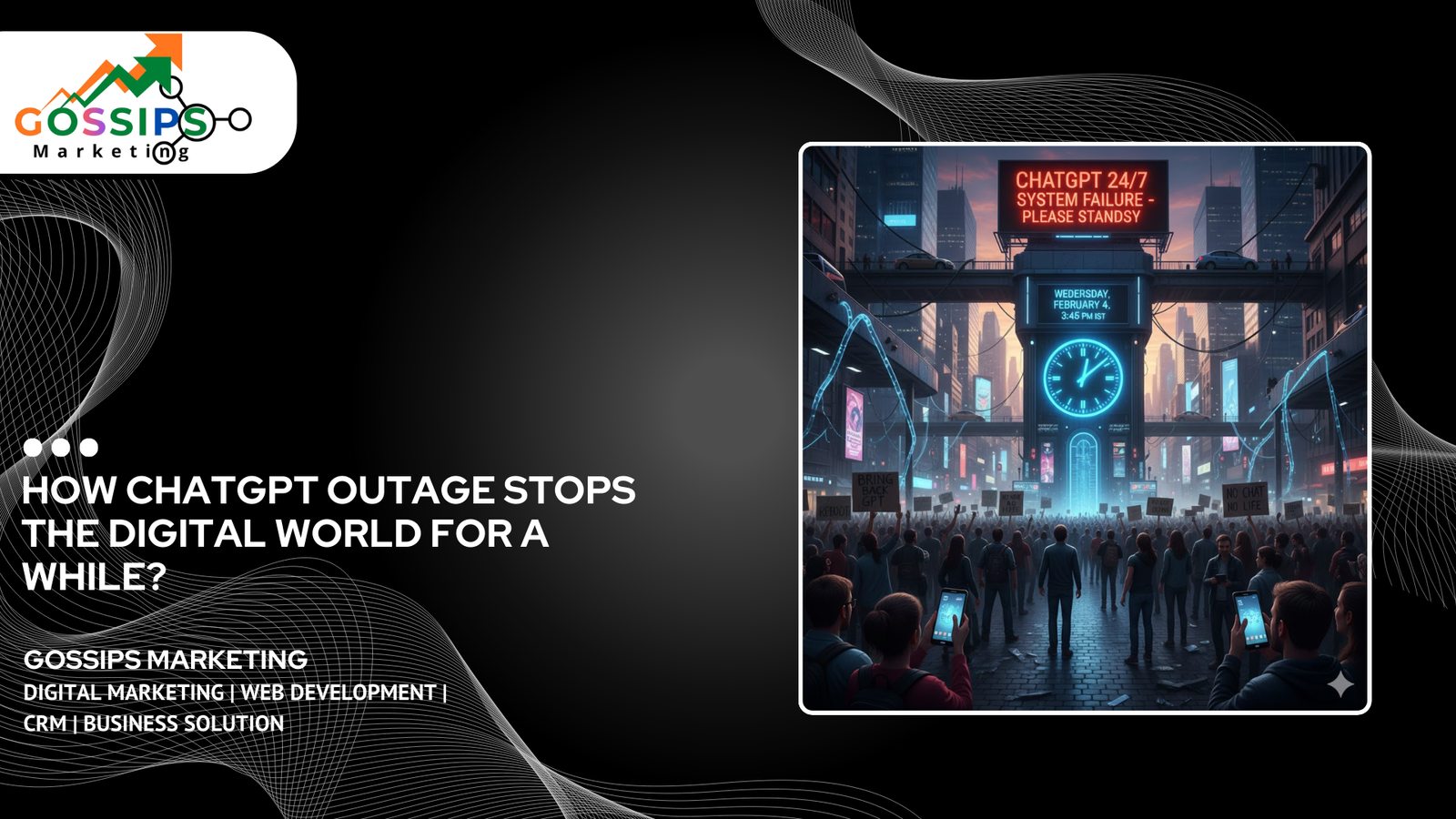
On February 4, 2026, ChatGPT experienced a significant outage affecting thousands of users across the United States. According to Downdetector, over 12,000 incidents were reported as of 3:25 PM ET. But this isn’t just a technical glitch. it’s a wake-up call about how dependent our digital ecosystem has become on AI tools. Let’s explore what happens when ChatGPT, Gemini, Copilot, and similar platforms go down, and why this matters more than you think.
The AI Dependency Crisis: How Deep Are We?
ChatGPT, Gemini, Copilot, and similar AI tools have seamlessly woven themselves into our daily work. What seemed like a luxury tool just two years ago is now a necessity for millions:
- Students depend on AI for research, essay drafting, and problem-solving
- Developers use AI for code generation, debugging, and documentation
- Marketers rely on AI for content ideation, copywriting, and campaign planning
- Writers leverage AI for brainstorming, editing, and productivity boost
- Customer support teams use AI chatbots to handle queries automatically
The dependency isn’t optional it’s structural. When these platforms go down, entire workflows collapse like a house of cards.
Read Blog :- Why the Proposal to Label Sections of AI-Generated Content Is Controversial?
Impact of AI Outage on Different Professions
Content Writers
Content creators lose their primary brainstorming partner. Tasks that would normally take 30 minutes now stretch to several hours. Research becomes time-consuming, tone refinement requires manual effort, and productivity drops by 40-60% during outages.
Programmers & Coders
Developers lose access to real-time code suggestions and debugging assistance. Stack Overflow becomes overloaded as developers search for manual solutions. Complex problems that could be solved in minutes now require hours of problem-solving.
Customer Support Teams
AI-powered chatbots handle 70% of initial customer interactions. During outages, support teams face a sudden spike in manual tickets, leading to slower response times and frustrated customers.
Digital Marketers
Ad copy generation, social media scheduling optimization, and campaign ideation come to a halt. Teams resort to manual processes, causing delays in campaign launches and missed market opportunities.
Students & Researchers
Deadlines don’t wait for technical issues. Students scramble to find alternative solutions, while researchers lose access to quick data analysis and literature summarization tools.

Top Online Digital Marketing Courses in India
If you are exploring online digital marketing courses in India in 2026, you’re entering one of the fastest-growing, most future-proof…


Digital Marketing Course Topics: Complete Syllabus for Beginners in 2026
If you want to learn digital marketing but feel confused about where to start, this guide will help you. Most beginners…

Digital Marketing Certification: A Smart Step for Career and Business
Today, every business wants to grow online. From small shops to big companies, everyone is using the internet to connect…

SEO Agency in USA for Small Businesses in 2026
In 2026, every small business needs a strong online presence to grow faster and reach more customers. A professional SEO…

AI SEO in 2026: Top Strategies to Rank Higher on
AI SEO is changing the future of digital marketing. Today, businesses are using AI powered SEO strategies to improve Google…
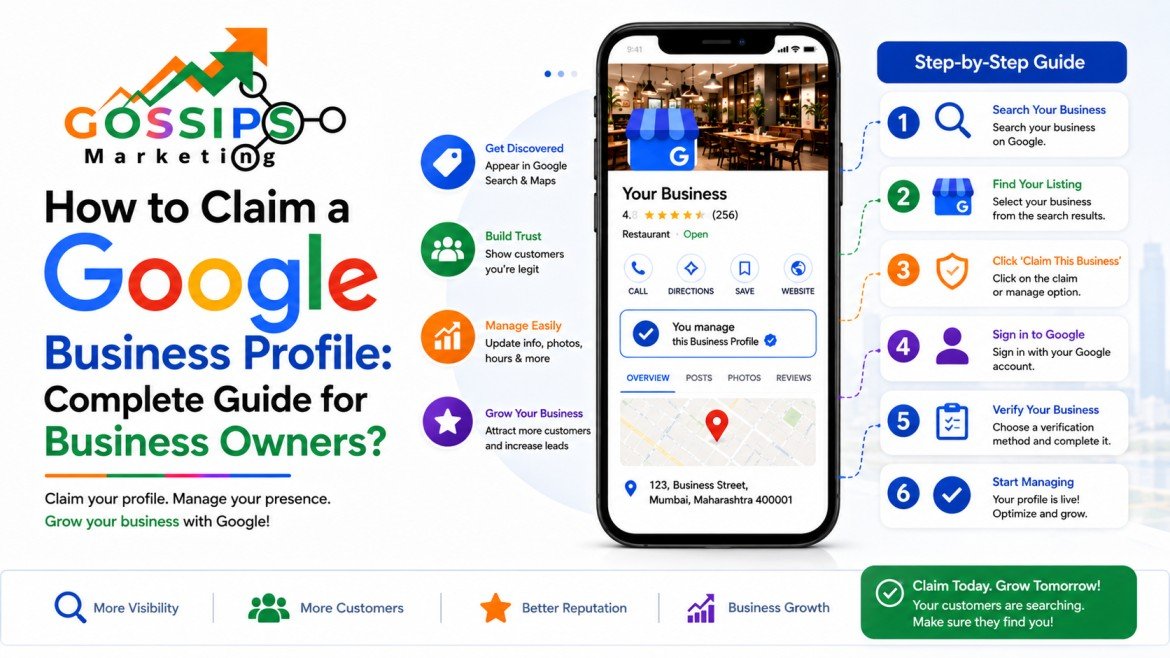
How to Claim a Google Business Profile: Complete Guide for
Introduction When someone searches your business name or “service + near me,” your Google Business Profile (GBP) is often the first…
What Happens When AI Tools Go Down?
When ChatGPT or similar services experience an outage, several immediate consequences follow:
Productivity Collapse: Teams face an average 50% productivity drop within the first 30 minutes of an outage.
Missed Deadlines: Projects scheduled with AI assistance suddenly face time constraints. What was planned as a 4-hour task becomes a 10-hour manual process.
Panic in Digital Teams: Slack channels explode with “Is ChatGPT down for anyone else?” messages. Teams scramble for workarounds and backup solutions.
Return to Manual Work: Professionals dust off old skills manual research, writing without AI assistance, and problem-solving without AI-powered suggestions become necessary again.
Financial Impact: Businesses lose productivity equivalent to thousands of dollars per hour during extended outages.
The Hidden Risk: Centralization of AI Services
Here’s the uncomfortable truth: we’ve built a digital infrastructure dependent on a few centralized platforms.
The Single Point of Failure Problem
When OpenAI’s servers go down, millions of users worldwide are affected. Unlike distributed systems, AI services operate on centralized cloud infrastructure, creating a critical vulnerability.
Cloud Dependency Issues
Most AI tools run on cloud infrastructure (AWS, Azure, Google Cloud). If the underlying cloud service experiences issues, the entire AI ecosystem falters.
Lack of Redundancy
Unlike traditional infrastructure with backup systems, many professionals have no alternative when their primary AI tool fails.
Comparison with Major Tech Outages
Facebook/Instagram Outage (2021)
Meta’s outage lasted 6+ hours, affecting 3.5 billion users worldwide. Businesses lost an estimated $100 million in advertising revenue. Digital teams returned to manual processes, and communication channels shifted to WhatsApp and Telegram.
Google Services Outage (2020)
Gmail, Drive, and other Google services went offline for several hours. Teams couldn’t access documents, communicate via Gmail, or store important files proving how dependent we’d become on a single tech company.
AWS Server Down Incidents
When Amazon Web Services experiences issues, hundreds of websites and apps go offline simultaneously. The ripple effect across the internet demonstrates the fragility of centralized cloud infrastructure.
The Digital World’s Dependency: Each outage reveals that our digital world isn’t decentralized it’s built on a foundation of a few tech giants.
Why Businesses Need Backup Plans Beyond AI?
Smart organizations are learning the hard way: relying solely on AI tools is risky.
Maintain Alternative Tools
- Keep secondary options like Bard, Perplexity, or open-source alternatives ready
- Train teams on 2-3 different platforms for redundancy
- Have manual research tools and resources available
Retain Human Skills
- Don’t let human expertise atrophy while AI handles tasks
- Ensure team members can still perform tasks manually
- Conduct periodic “AI-free” work sessions to maintain core skills
Develop Offline Workflows
- Create documentation and process guides that don’t require AI assistance
- Maintain templates and frameworks for common tasks
- Build a knowledge base of solutions for recurring problems
The Psychological Effect of AI Unavailability
When AI tools go down, something interesting happens psychologically:
Learned Helplessness: Teams feel paralyzed, convinced they can’t work without AI assistance.
AI Addiction-Like Behavior: The sudden unavailability creates stress and anxiety signs of genuine dependency.
Decision-Making Paralysis: Professionals hesitate to make decisions without AI input, even when they previously had the skills to do so.
Urgency Inflation: Tasks feel more urgent when there’s perceived scarcity of resources (in this case, AI availability).
Read Blog :- What Is Google AI Mode and How Does It Work?
The Future Risk: What If AI Becomes Critical Infrastructure?
Imagine a scenario where AI services are as critical as electricity or internet connectivity. If governments don’t regulate and build redundancy into AI infrastructure, we could face:
- National security risks if critical services depend on private AI platforms
- Economic disruption on a massive scale during extended outages
- Loss of essential services in healthcare, finance, and governance
What Governments & Companies Must Do:
- Develop regulations for AI service reliability
- Mandate backup systems and redundancy
- Invest in decentralized AI solutions
- Create disaster recovery protocols for AI-dependent services
How to Stay Productive During AI Outages
Practical Tips:
- Pre-plan your day with tasks that don’t require AI assistance
- Use offline tools like Notion, Obsidian, or traditional note-taking
- Batch your AI-dependent tasks during peak availability hours
- Conduct manual research using search engines and academic databases
- Use collaborative tools like Google Docs for team-based work
Backup Tools List:
- OpenAI’s ChatGPT → Perplexity AI, Google Gemini, Microsoft Copilot
- Content writing → Grammarly, Hemingway Editor, traditional outlining
- Code generation → Stack Overflow, GitHub, traditional problem-solving
- Research → Google Scholar, Wikipedia, industry publications
Manual Research Methods:
- Develop search engine optimization skills
- Learn to navigate industry databases
- Master traditional writing and brainstorming techniques
- Build a personal knowledge repository
Lessons Learned from ChatGPT Outage
The February 4, 2026 ChatGPT outage teaches us three critical lessons:
Digital Resilience is Non-Negotiable
Teams that survived the outage with minimal disruption had:
- Pre-established backup tools
- Team members trained on alternatives
- Emergency protocols in place
Diversification of Tools Saves the Day
Organizations using multiple AI platforms experienced minimal productivity loss. Diversification reduces dependency risk.
Human Skills Remain Irreplaceable
When AI failed, human creativity, problem-solving, and critical thinking became the most valuable assets. Investing in human skill development pays dividends.
Frequently Asked Questions (FAQ)
Q1: How often do ChatGPT outages occur?
A: While ChatGPT has high uptime (99.9%+), outages are not uncommon. In 2024-2025, multiple outages lasting 1-6 hours occurred. As more users depend on it, outages’ impact increases exponentially.
Q2: What should I do when ChatGPT is down?
A: Switch to alternative tools like Perplexity AI, Google Gemini, or Microsoft Copilot. If you need to work offline, use traditional methods like manual research, brainstorming notes, or existing templates. Take it as an opportunity to work on tasks that don’t require AI.
Q3: Does ChatGPT outage affect only the app or also the API?
A: Usually, outages affect both the web interface and the API. Developers using ChatGPT API experience disruptions to their applications as well.
Q4: How can businesses minimize the impact of AI outages?
A: Implement a multi-tool strategy, maintain alternative workflows, train employees on backup systems, and create emergency protocols. Never depend on a single AI tool for critical operations.
Q5: Is ChatGPT moving towards better reliability?
A: OpenAI continuously invests in infrastructure. However, as user base grows (over 200 million users), maintaining 100% uptime becomes increasingly challenging.
Q6: What’s the difference between planned maintenance and unexpected outages?
A: Planned maintenance is announced in advance, allowing users to plan accordingly. Unexpected outages (like February 4, 2026) catch teams off-guard and cause sudden productivity collapse.
Q7: How does AI outage impact small businesses more than large enterprises?
A: Large enterprises have IT teams, backup systems, and alternative tools. Small businesses and freelancers often operate with minimal backup infrastructure, making them more vulnerable to outages.
Q8: Can I switch to open-source AI alternatives?
A: Yes! Tools like Ollama, LLaMA, and Mistral offer open-source alternatives. However, they require technical setup and may not match ChatGPT’s capabilities.
Q9: Should AI tools be considered critical infrastructure?
A: As AI becomes integral to economic activity, there’s a strong case for treating it as critical infrastructure requiring government oversight, reliability standards, and regulatory frameworks.
Q10: What’s Gossips Marketing doing about this AI dependency issue?
A: Gossips Marketing, your trusted Jaipur-based digital marketing partner, stays ahead of these trends by:
- Monitoring AI tool reliability and outages in real-time
- Maintaining diversified tool stacks for client projects
- Training teams on backup workflows and manual processes
- Providing clients with AI-resilient marketing strategies
- Sharing insights on industry trends through regular tech updates and case studies
We ensure our clients never miss deadlines due to tool failures. Our proactive approach to technology keeps your campaigns running smoothly, with or without AI assistance.
Key Takeaway: AI tools have revolutionized digital work, but they’ve also created new vulnerabilities. The future belongs to professionals and organizations that master both AI-driven and traditional workflows. Stay prepared, stay diversified, and stay productive.
Stay updated with Gossips Marketing for more insights on technology trends, digital marketing strategies, and how to navigate the evolving digital landscape in 2026 and beyond.